Yesterday was International Women's Day. In honor of that fact, Daniel Craig stood up both in drag and in his James Bond attire while statistics were read by Judi Dench about how the life of men and women in the UK are different. I know that these statistics are UK based, but unfortunately they apply very well to the U.S. as well.
Anyway, I am not a big James Bond fan so I was not on the Daniel Craig bandwagon until my friend showed me this video. Now I totally get it. Those legs! That feminist advocacy! *drool*
Showing posts with label Sexism. Show all posts
Showing posts with label Sexism. Show all posts
Wednesday, March 9, 2011


Wednesday, January 26, 2011
Miss Representation: Taking on Objectification of Women in Media
The film Miss Representation (currently being screened at Sundance) addresses the sexualization and objectification of women in media and how this relates to the oppression of women in general.
I am personally really excited about seeing the film but Jezebel commentator Irin is wary of the trailer as it
Thoughts?
I am personally really excited about seeing the film but Jezebel commentator Irin is wary of the trailer as it
paints a rather broad brush (and yes, trailers are wont to do this — we'll reserve final judgment til we see the actual movie), seemingly uncritically describing all public displays of sexuality as inherently demeaning. It's not that Britney Spears has nothing to do with how female politicians are treated on cable news, but conflating voluntary displays of sexiness in entertainment with demeaning sexualization of public figures, played over ominous music no less, is unnuanced. So are the vague references to the "media" and "Hollywood" as faceless, catchall entities.
Thoughts?
Tuesday, July 20, 2010
Women on the sidelines -- Troubling ideas about female coaches
Last summer I wrote a post about some of my mom's troubling ideas about how to be a good (read: tough) soccer player, said player must play "like a boy". Well, the same Challenger British Soccer camp, coordinated by my mom, that sparked that post was back in my hometown this past June, and my mom had more ideas about gender and soccer to share.
It's not often that my mom and I fundamentally disagree about something, but apparently when it comes to sports we don't quite see eye to eye.
This year my mom was discussing her contract with Challenger Sports, which she had recently renewed, and she mentioned that one of her only stipulations was that she did not want female coaches because she "doesn't like them". She was adamant about this and I asked her why. Her reasons broke down as follows:
1) Female coaches don't have the same commanding presence on the field as male coaches.
2) On a related note, children respond better to men than they do to women.
Overall, she believes that female coaches aren't as loud or forceful as male coaches and they will, therefore, not be able to coach as effectively.
Ok. The first thing that really bothered me about my mom saying this is that she has been coaching youth soccer for years. When I was in high school I used to help her coach young players in our home town. The idea that she truly believed that she and I, as women, could not be effective coaches due to our femaleness baffled me. In fact, I knew it could not be how she honestly felt because she has said on several ocassions that people have approached her indicating that she was considered one of the top coaches in our small town because of her experience as a soccer player and coach, which none of the other coaches possessed even a fraction of.
That recognition must have felt great for her, except that by her logic about what makes an effective coach, there is no reason that she should be a good coach. She is a woman, after all.
I asked my mom about her refusal to allow female coaches at the soccer camp. Had she seen any of the female coaches employed by Challenger do their job? No. Then how could she be so sure that these female coaches wouldn't be as good at doing the same job done by the male coaches? She just knew. Did she understand that all coaches employed by Challenger had to have the same minimum level of coaching training? Yes.
I tried to get her to understand that her intentional exclusion of women coaches was based entirely on her gendered assumptions about the capabilities of men and women. She assumes that female coaches will be quiet and perhaps even timid on the field and will not demand the attention of the children they are coaching. While those are atrributes that are generally perscribed to females in our society of the gender binary, it is unfair to use only those stereotypes of what women are when considering which coaches to bring to a camp in our town.
It makes little sense for a shy, quiet, timid woman to want to coach a sport, let alone get the training required for getting into a program like Challenger that requires going abroad to coach kids in another country. The women in these situations have to be good coaches, otherwise they wouldn't have their jobs.
My mom automatically codes certain attributes as either feminine or masculine and assumes that only women can possess the feminine traits and men the masculine. She doesn't always do this, but she defaults to this when she discusses things like sports and athletes. She gives little room for the variety of human behavior that accepts that men can sometimes be quiet and women can be forceful. That kind of narrow-mindedness means that the kids in my small community may never experience positive examples of female soccer coaches because for some of them, this soccer camp is their only experience with playing the sport. It's not fair, especially to young female players who are being denied a role model they can better identify with, considering that the possible female coaches that could be brought to town are being turned away for nothing more than the fact that they are women.
My mom seemed unmoved by my attempts to get her to see things from my point of view on this issue, so I decided not to pursue it further with her. But it's a topic that I feel is important and needs to be addressed. Hence this post.
It's not often that my mom and I fundamentally disagree about something, but apparently when it comes to sports we don't quite see eye to eye.
This year my mom was discussing her contract with Challenger Sports, which she had recently renewed, and she mentioned that one of her only stipulations was that she did not want female coaches because she "doesn't like them". She was adamant about this and I asked her why. Her reasons broke down as follows:
1) Female coaches don't have the same commanding presence on the field as male coaches.
2) On a related note, children respond better to men than they do to women.
Overall, she believes that female coaches aren't as loud or forceful as male coaches and they will, therefore, not be able to coach as effectively.
Ok. The first thing that really bothered me about my mom saying this is that she has been coaching youth soccer for years. When I was in high school I used to help her coach young players in our home town. The idea that she truly believed that she and I, as women, could not be effective coaches due to our femaleness baffled me. In fact, I knew it could not be how she honestly felt because she has said on several ocassions that people have approached her indicating that she was considered one of the top coaches in our small town because of her experience as a soccer player and coach, which none of the other coaches possessed even a fraction of.
That recognition must have felt great for her, except that by her logic about what makes an effective coach, there is no reason that she should be a good coach. She is a woman, after all.
I asked my mom about her refusal to allow female coaches at the soccer camp. Had she seen any of the female coaches employed by Challenger do their job? No. Then how could she be so sure that these female coaches wouldn't be as good at doing the same job done by the male coaches? She just knew. Did she understand that all coaches employed by Challenger had to have the same minimum level of coaching training? Yes.
I tried to get her to understand that her intentional exclusion of women coaches was based entirely on her gendered assumptions about the capabilities of men and women. She assumes that female coaches will be quiet and perhaps even timid on the field and will not demand the attention of the children they are coaching. While those are atrributes that are generally perscribed to females in our society of the gender binary, it is unfair to use only those stereotypes of what women are when considering which coaches to bring to a camp in our town.
It makes little sense for a shy, quiet, timid woman to want to coach a sport, let alone get the training required for getting into a program like Challenger that requires going abroad to coach kids in another country. The women in these situations have to be good coaches, otherwise they wouldn't have their jobs.
My mom automatically codes certain attributes as either feminine or masculine and assumes that only women can possess the feminine traits and men the masculine. She doesn't always do this, but she defaults to this when she discusses things like sports and athletes. She gives little room for the variety of human behavior that accepts that men can sometimes be quiet and women can be forceful. That kind of narrow-mindedness means that the kids in my small community may never experience positive examples of female soccer coaches because for some of them, this soccer camp is their only experience with playing the sport. It's not fair, especially to young female players who are being denied a role model they can better identify with, considering that the possible female coaches that could be brought to town are being turned away for nothing more than the fact that they are women.
My mom seemed unmoved by my attempts to get her to see things from my point of view on this issue, so I decided not to pursue it further with her. But it's a topic that I feel is important and needs to be addressed. Hence this post.
Monday, June 21, 2010
Women's bodies, commercials, and the men's World Cup (part 3)
One thing about World Cup season is that it means I end up watching a lot more TV than I'm used to. The commercials tend not to be a good thing for my feminist conscience. Women's bodies are used to sell all sorts of things, such as Budweiser beer in the following commercial that was prepared to be played during the World Cup.
While a woman's body is not the main focus of this commercial, the female form is still objectified and portrayed as nothing but a distraction to the men playing soccer. I find it interesting how the beer is portrayed in a similar way: as a distraction to the men on the field. However, the difference lies in the fact that beer is not representative of human beings, and when you're comparing women to beer, what is that saying about women?
Part one and two in my World Cup series.
While a woman's body is not the main focus of this commercial, the female form is still objectified and portrayed as nothing but a distraction to the men playing soccer. I find it interesting how the beer is portrayed in a similar way: as a distraction to the men on the field. However, the difference lies in the fact that beer is not representative of human beings, and when you're comparing women to beer, what is that saying about women?
A close up of a soccer ball on a field where one field player faces off with a goal keeper for a penalty kick that will determine the outcome of the game in question. The goal keeper and the player preparing to take the kick exchange looks. Over the shoulder of the field player, fans cheering against the goal keeper hold up individual signs that together create an image of a hula girl, which distracts the goal keeper. The field player smirks and winds up to take the kick. Just then, fans sitting behind the goal also hold up individual signs that create the image of a Budweiser beer can and glass filled with beer. The field player is so distracted by this image that his kick goes wide to the right of the goal, losing the game.
Part one and two in my World Cup series.
Thursday, June 17, 2010
Women's bodies and the men's World Cup - Pretty women help lose games
I was watching ESPN 2 this morning, waiting for the next match in the World Cup (France v. Mexico) to start, when I heard commentators briefly discussing how Spain's shocking defeat by Switzerland was being blamed by some on a female journalist for a Spanish TV station.
Isn't that nice.
Apparently, Sara Carbonero is dating the Spanish goalkeeper, Iker Casillas, who gave up the match's only goal in the game against Switzerland. The win by Switzerland was a huge upset, and Casillas' mistake is being blamed, by some fans, on Carbonero whose presence was known to her boyfriend and may have potentially been a distraction.
This kind of reaction is ridiculous. Making a conventionally attractive woman a scapegoat for the loss of a game that was played by men not only provides reason for undue scorn against a woman who was doing her job, but it also perpetuates the stereotype that when men see a pretty woman, they lose all self-control and can't help but, you know, lose a World Cup match.
I would also like to add that if you watch the replay of the goal scored by Switzerland, it is clear (to me at least) that it was not a matter of Casillas being distracted by his girlfriend, during which time a goal slipped by. He made a bad decision which had bad consequences.
Part one in my World Cup series.
Isn't that nice.
Apparently, Sara Carbonero is dating the Spanish goalkeeper, Iker Casillas, who gave up the match's only goal in the game against Switzerland. The win by Switzerland was a huge upset, and Casillas' mistake is being blamed, by some fans, on Carbonero whose presence was known to her boyfriend and may have potentially been a distraction.
This kind of reaction is ridiculous. Making a conventionally attractive woman a scapegoat for the loss of a game that was played by men not only provides reason for undue scorn against a woman who was doing her job, but it also perpetuates the stereotype that when men see a pretty woman, they lose all self-control and can't help but, you know, lose a World Cup match.
I would also like to add that if you watch the replay of the goal scored by Switzerland, it is clear (to me at least) that it was not a matter of Casillas being distracted by his girlfriend, during which time a goal slipped by. He made a bad decision which had bad consequences.
Part one in my World Cup series.
Thursday, April 15, 2010
Know what I hate?
When you're trying to co-host a feminist radio show and some guy calls up and asks if he can request a song.
This is not unusual. People call to request songs on the radio all the time.
But when you explain that you host a feminist radio show and that you only play female-positive (or neutral) music and the guy says that he'll call back...and then he calls back asking you to play this song by Ludacris (warning - the lyrics are horribly sexist). Well, I hate that.
When that song was requested by a guy who clearly knew the criteria that Kate and I use to judge what music we play on our feminist radio show, it was annoying. It was clearly an attempt to try to cut us down. Either that, or that guy was really uneducated and had no concept at all about what "female-positive" means. But I don't buy that at all.
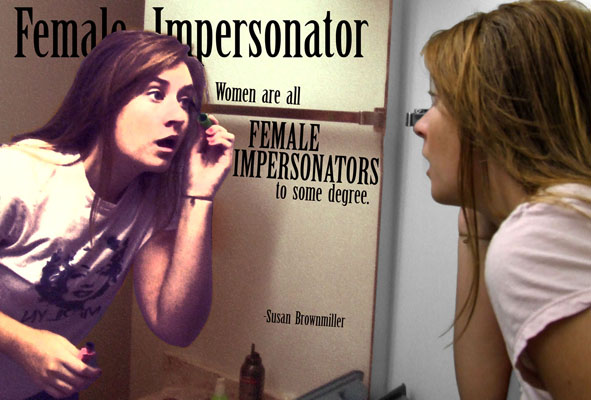
This isn't even the worst of what Kate and I have experienced during our three years of hosting the Female Impersonators Radio Hour at Knox College, but it never ceases to be annoying.
Ever.
This is not unusual. People call to request songs on the radio all the time.
But when you explain that you host a feminist radio show and that you only play female-positive (or neutral) music and the guy says that he'll call back...and then he calls back asking you to play this song by Ludacris (warning - the lyrics are horribly sexist). Well, I hate that.
When that song was requested by a guy who clearly knew the criteria that Kate and I use to judge what music we play on our feminist radio show, it was annoying. It was clearly an attempt to try to cut us down. Either that, or that guy was really uneducated and had no concept at all about what "female-positive" means. But I don't buy that at all.
This isn't even the worst of what Kate and I have experienced during our three years of hosting the Female Impersonators Radio Hour at Knox College, but it never ceases to be annoying.
Ever.
Thursday, April 8, 2010
A post in which I question my participation in social networking...
Like millions of other people in the world, I have a Facebook account. I started my account in order to network with people who would be attending Knox College with me, and over the years it has grown into one of my preferred methods of communicating with people I am unable to see often.
However, Facebook is often a cause of much frustration for me because it gives people space to proclaim some rather shockingly sexist attitudes and beliefs. For example, one male on my friends list recently posted a status that said, "handjobs are like the WNBA, a cheap imitation of something guys do better themselves." I tried to point out how this was sexist, but the poster seemed to get distracted and have his attitude reinforced by others who commented saying that this status was funny.
I call out sexist/homophobic/racist statuses rather frequently to varying degrees of success. But today I was met with a shocking Facebook fan page. Anyone can make a fan page on Facebook, and currently there is a growing trend for people to make pages for anything even remotely clever that might attract fans. Today in the "Suggestions" sidebar of my Facebook home page, I was introduced to a fan page for "more girls go to college than boys, so stfu and make ME a sandwich," a page with more than 147,000 fans* and some pretty horribly sexist photos.

However, Facebook is often a cause of much frustration for me because it gives people space to proclaim some rather shockingly sexist attitudes and beliefs. For example, one male on my friends list recently posted a status that said, "handjobs are like the WNBA, a cheap imitation of something guys do better themselves." I tried to point out how this was sexist, but the poster seemed to get distracted and have his attitude reinforced by others who commented saying that this status was funny.
I call out sexist/homophobic/racist statuses rather frequently to varying degrees of success. But today I was met with a shocking Facebook fan page. Anyone can make a fan page on Facebook, and currently there is a growing trend for people to make pages for anything even remotely clever that might attract fans. Today in the "Suggestions" sidebar of my Facebook home page, I was introduced to a fan page for "more girls go to college than boys, so stfu and make ME a sandwich," a page with more than 147,000 fans* and some pretty horribly sexist photos.
(click for a better view)
"But Amelia," people will say. "The first part is true. More girls are in college than boys. And the other part is a joke. Stop being a humorless feminist and just take a joke. It's a joke, see? Haha!"
I'll be honest. I am writing this post without knowing the current statistics when it comes to gender and college attendance in America (I know that my college is about 60/40 when it comes to women/men), but even if it is true beyond a doubt that more women attend college then men, that does not excuse the sexist language in the title of this page. Yes, it may be an inversion of a sexist trope, but I don't find it funny because it is still being used to put people down.**
The "make me a sandwich" trope is used so commonly that most people probably don't recognize the problems it presents. It is often used as a means of demeaning women who dare to make something of themselves. It is used to put women "in their place" - the kitchen, where they can serve men. Turning this on men does not make it funny. It's still sexist, through and through.**
The worst part of this terrible fan page?

Two of my friends are fans.
*At approximately 8:15pm CST on April 7, 2010 when I took the screen shot featured above
**EDIT (4/8/10): Added some lines to clarify that inverting a sexist "joke" so that it's aimed at men does not mean it's funny.
Tuesday, November 10, 2009
How I came to yell at a woman on the street about feminism
My sister and I were walking back from the bus and a woman came riding up on her bike beside us, talking about how crappy men are and how unlucky in love she is. We mumbled in agreement, etc, and thought we left her behind us. Then she rode up again and started talking about how men are wusses and pansies and girls when they don't do their "job" (whatever that is). I told her I didn't appreciate her comparing weak men to women, saying that it put women in a hierarchy under men. Well, I said it less academically. Eventually we ended up shouting and she called us lesbians, and then somehow I ended up yelling across the gas station area, "'Man up' is not an acceptable term!" At that point, I became the yelling lady and the circle was complete. The student became the teacher.
Honestly, I started talking back to her because I've had enough with people not living their beliefs. I believe in gender equality, even - especially - in language. How we speak and the words and idioms we use reveals our inner biases and beliefs. Inclusive language in church is another fine example of this exact thing. If we're for something, well then, let's be for it.
All in all, I just didn't want to think later, "Why didn't I say anything?" Casual sexism is sexism is sexism.
Would I have been nearly as vocal if it was a man, or a person of color of any gender? No. Her whiteness and gender made me bold in ways I wouldn't have if it was another person. Well, maybe it didn't make me bold, but it made HER non-threatening. I may have said something, but definitely not yelling the way I was.
Would I have even said anything if it was in a group of my friends or family?
Casual sexism is sexism is sexism.
Honestly, I started talking back to her because I've had enough with people not living their beliefs. I believe in gender equality, even - especially - in language. How we speak and the words and idioms we use reveals our inner biases and beliefs. Inclusive language in church is another fine example of this exact thing. If we're for something, well then, let's be for it.
All in all, I just didn't want to think later, "Why didn't I say anything?" Casual sexism is sexism is sexism.
Would I have been nearly as vocal if it was a man, or a person of color of any gender? No. Her whiteness and gender made me bold in ways I wouldn't have if it was another person. Well, maybe it didn't make me bold, but it made HER non-threatening. I may have said something, but definitely not yelling the way I was.
Would I have even said anything if it was in a group of my friends or family?
Casual sexism is sexism is sexism.
Saturday, August 22, 2009
Inked: “She’s got a tattoo. Look at that tattoo.” (Part two)
In part one of this series I discussed briefly how men and women are treated differently when they decide to get tattoos. Women who have tattoos are often reduced to their sexuality and it is assumed, especially if the tattoo is visible, that somehow this woman is sexually available. For this post, I would like to focus on one particular kind of tattoo: The lower back tattoo, AKA the “tramp stamp.”
As I mentioned in my previous post, I have three tattoos. My latest tattoo was one I designed as a way to represent my feminism and my work as a blogger. Every tattoo I have gotten has been on a meaningful place on my body. For this tattoo I decided to get it on my lower back. This was a calculated move on my part.
The lower back tattoo has developed many negative connotations, and it is often referred to as a “tramp stamp.” Because the lower back tattoo is most often seen on women, the name “tramp stamp” has particularly offensive meanings.
According to Merriam-Webster, the word tramp is a noun that can mean one of the following:
Using a woman’s sexual history (or just her perceived sexual history) as a means of shaming her seems to come easily in this society. A woman has sex before marriage or with more than one partner? She’s a dirty slut. She wears a skirt? She must be looking for sex. She flirts with a man? She must want to go all the way. She gets a tattoo on her lower back? Clearly she’s a tramp (prostitute), and that’s just shameful. Really, there’s no winning for women, and it’s something I’m sick of.
So, I decided to get a feminist “tramp stamp.” I thought the irony was irresistible and felt it might be an interesting comment on how absurd it is to assume that because a woman has a lower back tattoo, she must be “of loose morals.”
Most of the time, I don’t remember that I have a lower back tattoo unless someone mentions it when it shows a little from under my shirt. But one day when I went to a gas station next to my dorm that I had just moved into, I was relentlessly reminded of it.
This particular gas station has a bad reputation around my college campus as being dangerous. I have heard both students and faculty say that people have been shot there. But because everything on campus was closed this summer, this gas station was so close, and I didn’t have a refrigerator to keep food in, I often went to this gas station despite it making me feel uneasy. One afternoon I walked into the gas station past a group of seven men who were standing near the register. I didn’t make eye contact with any of them, but as I passed, one of the men said loudly to one of his companions, “She’s got a tattoo! Look at that sexy tattoo she’s got! She’s got a tattoo. Bet she thinks she’s fine.” I kept walking, trying to ignore him without looking at him. “I see you smilin’, girl,” the same man called after me, even though I had clearly not been smiling. I quickly made my way to the back of the store while the men remained in the front, being loud and obnoxious to the woman working the cash register. I waited until they had left before I went to get the food that I had come for. And even then, I waited a few more minutes to be sure that they wouldn’t be waiting outside. There were so many of them, and I didn’t feel comfortable with the thought of having to walk past them again.
When I got back to my dorm, I was flustered, and I quickly checked a mirror to see how much of my tattoo had been showing. Not even half an inch. This unnerved me even more, as I tried to figure out what had caught the man’s eye in the first place. I was mad that this man felt he had the right to comment about my appearance, especially because the tattoo that was being commented on was a feminist tattoo. It’s meant to make a statement about how unacceptable it is for women to have to experience harassment and have people assume things about their sexuality just from a tattoo. The irony in this experience mirrors the irony in my choice of placement for my tattoo in a sad, although not completely unexpected way.
As I mentioned in my previous post, I have three tattoos. My latest tattoo was one I designed as a way to represent my feminism and my work as a blogger. Every tattoo I have gotten has been on a meaningful place on my body. For this tattoo I decided to get it on my lower back. This was a calculated move on my part.
The lower back tattoo has developed many negative connotations, and it is often referred to as a “tramp stamp.” Because the lower back tattoo is most often seen on women, the name “tramp stamp” has particularly offensive meanings.
According to Merriam-Webster, the word tramp is a noun that can mean one of the following:
1 a : vagrant b : a foot traveler c : a woman of loose morals; specifically :For more insight on how the tramp stamp is thought of today, you might want to check out the Urban Dictionary entry for the word. But be warned, it’s not pleasant.
prostitute (Emphasis mine)
Using a woman’s sexual history (or just her perceived sexual history) as a means of shaming her seems to come easily in this society. A woman has sex before marriage or with more than one partner? She’s a dirty slut. She wears a skirt? She must be looking for sex. She flirts with a man? She must want to go all the way. She gets a tattoo on her lower back? Clearly she’s a tramp (prostitute), and that’s just shameful. Really, there’s no winning for women, and it’s something I’m sick of.
So, I decided to get a feminist “tramp stamp.” I thought the irony was irresistible and felt it might be an interesting comment on how absurd it is to assume that because a woman has a lower back tattoo, she must be “of loose morals.”
Most of the time, I don’t remember that I have a lower back tattoo unless someone mentions it when it shows a little from under my shirt. But one day when I went to a gas station next to my dorm that I had just moved into, I was relentlessly reminded of it.
This particular gas station has a bad reputation around my college campus as being dangerous. I have heard both students and faculty say that people have been shot there. But because everything on campus was closed this summer, this gas station was so close, and I didn’t have a refrigerator to keep food in, I often went to this gas station despite it making me feel uneasy. One afternoon I walked into the gas station past a group of seven men who were standing near the register. I didn’t make eye contact with any of them, but as I passed, one of the men said loudly to one of his companions, “She’s got a tattoo! Look at that sexy tattoo she’s got! She’s got a tattoo. Bet she thinks she’s fine.” I kept walking, trying to ignore him without looking at him. “I see you smilin’, girl,” the same man called after me, even though I had clearly not been smiling. I quickly made my way to the back of the store while the men remained in the front, being loud and obnoxious to the woman working the cash register. I waited until they had left before I went to get the food that I had come for. And even then, I waited a few more minutes to be sure that they wouldn’t be waiting outside. There were so many of them, and I didn’t feel comfortable with the thought of having to walk past them again.
When I got back to my dorm, I was flustered, and I quickly checked a mirror to see how much of my tattoo had been showing. Not even half an inch. This unnerved me even more, as I tried to figure out what had caught the man’s eye in the first place. I was mad that this man felt he had the right to comment about my appearance, especially because the tattoo that was being commented on was a feminist tattoo. It’s meant to make a statement about how unacceptable it is for women to have to experience harassment and have people assume things about their sexuality just from a tattoo. The irony in this experience mirrors the irony in my choice of placement for my tattoo in a sad, although not completely unexpected way.
Wednesday, July 8, 2009
Advertising then and now
I've mentioned before, but I'm part of a survey pool for new products, new marketing campaigns, etc.
Because of my demographics as a 20-something woman, I end up taking a lot of surveys about things I'm not really interested in. I answer questions about things like cleaning supplies (am I concerned about the product hurting my family while still cleaning well?), cereal (is this healthy enough for my family?) and make up (how much am I willing to spend on a product nearly identical to 4 others out there?). It's somewhat annoying to answer repetitive questions about products the company feels are "women's products." From time to time, I get fun surveys about alcohol or movies, but mostly it's things traditionally advertised to women.
I've been rewatching Mad Men and this scene stands out even more to me in light of my own surveys: http://www.youtube.com/watch?v=s0Hru4IucB0 (embedding disabled).
In the scene, the all-male advertising staff puts the office secretaries in a testing room and watches as they all try on lipstick. The men say things like "Maybe we should have put a man in there so they'd take it seriously." After Peggy, the main character's secretary, displays some talent in coming up with catchy slogans, one of the men describes it as "like watching a dog playing piano."
Mad Men is a window into the blatant sexism of the early 60's, where men constantly disregard the women or view them as objects, where people of color are completely invisible (except in service jobs), where the queer characters repress their sexuality and hide themselves from the people around them.
But as I watch the show, I'm reminded of how much this hasn't changed. About how when I take surveys, I'm an age and a gender before I'm a person, about how the questions asked of me have as much to do with antiquated notions of gender binaries and what women "should" be concerned about as my own personal interests.
Because of my demographics as a 20-something woman, I end up taking a lot of surveys about things I'm not really interested in. I answer questions about things like cleaning supplies (am I concerned about the product hurting my family while still cleaning well?), cereal (is this healthy enough for my family?) and make up (how much am I willing to spend on a product nearly identical to 4 others out there?). It's somewhat annoying to answer repetitive questions about products the company feels are "women's products." From time to time, I get fun surveys about alcohol or movies, but mostly it's things traditionally advertised to women.
I've been rewatching Mad Men and this scene stands out even more to me in light of my own surveys: http://www.youtube.com/watch?v=s0Hru4IucB0 (embedding disabled).
In the scene, the all-male advertising staff puts the office secretaries in a testing room and watches as they all try on lipstick. The men say things like "Maybe we should have put a man in there so they'd take it seriously." After Peggy, the main character's secretary, displays some talent in coming up with catchy slogans, one of the men describes it as "like watching a dog playing piano."
Mad Men is a window into the blatant sexism of the early 60's, where men constantly disregard the women or view them as objects, where people of color are completely invisible (except in service jobs), where the queer characters repress their sexuality and hide themselves from the people around them.
But as I watch the show, I'm reminded of how much this hasn't changed. About how when I take surveys, I'm an age and a gender before I'm a person, about how the questions asked of me have as much to do with antiquated notions of gender binaries and what women "should" be concerned about as my own personal interests.
Tuesday, June 23, 2009
Old School Sexism
According to Disney, I will never have a beau because...
I don't walk feminine, talk feminine...
I don't act shy or sigh feminine...
I'm not delicate or demure...
And I never hide the real me.
Damn.
A friend of mine told me this song ("Femininity" from the movie Summer Magic) made her think of me in an ironic sort of way. I haven't seen this movie. Have you? What do you think of this song?
I don't walk feminine, talk feminine...
I don't act shy or sigh feminine...
I'm not delicate or demure...
And I never hide the real me.
Damn.
A friend of mine told me this song ("Femininity" from the movie Summer Magic) made her think of me in an ironic sort of way. I haven't seen this movie. Have you? What do you think of this song?
Monday, June 22, 2009
"In what could be interpreted as sexist bullshit..."
 So, during my daily perusal of the BBC News website, I came across this screen and had to get a screen shot of one of the pictures featured on it, since I'm sure it won't be up long. Above a link to this article ("Argghougooou!") on the front page were two pictures: The face of a female tennis player that I could not recognize...and a hippo with its mouth wide open. The caption read, "Does the grunting really help tennis stars?" If you click on the picture above, you will see the screen shot I took. I put a little red box around the picture in the lower left corner.
Awesome, I thought. Equating women athletes with hippos. Not like girls who want to be athletes have enough to deal with already. Let's just add to the mix the fear of being associated with an animal that has been used as a comparison to degrade large women.
When I finally got to the article, I could already imagine some of what I was in store for. I'm not an avid tennis fan, but I do find it interesting the way the topic of grunting tends to be covered so frequently (as I wrote about here).
I'll admit that when I first read this piece, I was really skeptical about it. A lot of what I have read about tennis players and the noise they make has portrayed women in very unfavorable terms that sometimes seem to have little to do with the topic at hand - the noise they make. This piece was especially upsetting.
First of all, the picture at the top of the article is a rectangle composed of four smaller pictures, three female tennis players and one male. Two of the women are shown hitting a tennis ball, as is the lone male player. The third woman is shown with her mouth open, in an expression that looks like one of joy. She is not hitting the ball. Her inclusion in an illustration about the noises made by tennis players hitting tennis balls is confusing. Perhaps it is to remind the reader of the hippo with its mouth open?
Once I finally made my way into the piece itself, I was struck by the terms used to describe the sounds at some women's tennis matches. In the second paragraph, the author, Tom Geoghegan, describes a fear that some women's matches "now bear more of an aural resemblance to a torture chamber." Not far down the page, the author tells how Portuguese player Michelle Larcher de Brito's "grunt has all the aural elements of a wounded fox."
Grunting isn't a new phenomenon in tennis, the author assures the reader. In the 1970s, Jimmy Connors was known for his "noisy game" and in 1988 Andre Agassi had a complaint lodged against him for his "expressive exertions."
Before diving into the perceived drawbacks and benefits of grunting during matches, and an overview of the rules of the sport regarding it, the author had this to say:
But, in what could be interpreted as a sexist backlash, it is only since women took up the habit that it has become much of an issue.
Interesting that you would say that, Tom Geoghegan. I was definitely getting the sense that you were being sexist in your choice of descriptions of female and male players. I understand that these players may very well make different sounds during their games, but the huge discrepancy between descriptions relating women's sounds to "torture chambers" and "wounded foxes" and men's sounds as "noisy" and "expressive exertions" is inexcusable and sexist. There are ways to describe differences in sounds that do not rely on such degrading images, especially when such images are only applied to one group of athletes, and not another.
This piece was so full of sexist fail that I'm not even going to talk about its other content.
Tuesday, June 9, 2009
Defending Conservative Women: Playboy, hate f*cking, and misogyny
This all happened last week, but I'm just catching up to it now:
Apparently Playboy put an article by Guy Cimbalo on its website titled "So Right It's Wrong: Ten Conservative Women I’d Like to Hate-F*ck," which was removed 24 hours later. I wasn't able to read it, but Jezebel caught the list and addressed the utter horrific nature of the piece. Feministe also responded based on the Jezebel piece. The list included Michelle Malkin, Megyn Kelly, Mary Katherine Ham, Amanda Carpenter, Elisabeth Hasselback, Dana Perino, Laura Ingraham, Pamela Geller, Michele Bachman, and Peggy Noonan.
While I've made it clear I'm no fan of Michele Bachman, it's always been that I've disagreed with her politics.
If we defend liberal women from sexist attacks, we sure as hell better defend conservative women from sexist attacks. Like Sarah Palin, like Ann Coulter, we can't let any woman be attacked.
Elizabeth Hassleback responded on The View:
In the clip, Hasselback details her actions and thoughts regarding the piece, and Sherri Shepard equates hate f*cking with rape - a point that some people have a problem with. Amelia McDonell-Parry argues that hate f*cking is consensual sex with someone you can't stand, maybe want to call names, but want to have sex with them regardless. I've enjoyed McDonell-Parry's articles and posts regularly, but I'm going to push back on this and suggest that none of the women on this list want to have sex - hate f*cking or not - with Cimbalo. And what do we call nonconsensual sex? RAPE. I think her suggestion that calling it rape is wrong contributes to our rape culture. She admits that the piece was offensive and misogynistic but that it's a different viewpoint for Cimbalo and the women on the list. In my opinion, it just perpetuates that if you don't call it rape, then it isn't rape. And that's just wrong.
So to Michelle Malkin, Megyn Kelly, Mary Katherine Ham, Amanda Carpenter, Elisabeth Hassleback, Dana Perino, Laura Ingraham, Pamela Geller, Peggy Noonan and yes, even Michele Bachman - we will not stand for this. You deserve better. As a liberal to a conservative, I'm sorry we let this happen.
Apparently Playboy put an article by Guy Cimbalo on its website titled "So Right It's Wrong: Ten Conservative Women I’d Like to Hate-F*ck," which was removed 24 hours later. I wasn't able to read it, but Jezebel caught the list and addressed the utter horrific nature of the piece. Feministe also responded based on the Jezebel piece. The list included Michelle Malkin, Megyn Kelly, Mary Katherine Ham, Amanda Carpenter, Elisabeth Hasselback, Dana Perino, Laura Ingraham, Pamela Geller, Michele Bachman, and Peggy Noonan.
While I've made it clear I'm no fan of Michele Bachman, it's always been that I've disagreed with her politics.
If we defend liberal women from sexist attacks, we sure as hell better defend conservative women from sexist attacks. Like Sarah Palin, like Ann Coulter, we can't let any woman be attacked.
Elizabeth Hassleback responded on The View:
In the clip, Hasselback details her actions and thoughts regarding the piece, and Sherri Shepard equates hate f*cking with rape - a point that some people have a problem with. Amelia McDonell-Parry argues that hate f*cking is consensual sex with someone you can't stand, maybe want to call names, but want to have sex with them regardless. I've enjoyed McDonell-Parry's articles and posts regularly, but I'm going to push back on this and suggest that none of the women on this list want to have sex - hate f*cking or not - with Cimbalo. And what do we call nonconsensual sex? RAPE. I think her suggestion that calling it rape is wrong contributes to our rape culture. She admits that the piece was offensive and misogynistic but that it's a different viewpoint for Cimbalo and the women on the list. In my opinion, it just perpetuates that if you don't call it rape, then it isn't rape. And that's just wrong.
So to Michelle Malkin, Megyn Kelly, Mary Katherine Ham, Amanda Carpenter, Elisabeth Hassleback, Dana Perino, Laura Ingraham, Pamela Geller, Peggy Noonan and yes, even Michele Bachman - we will not stand for this. You deserve better. As a liberal to a conservative, I'm sorry we let this happen.
Wednesday, May 27, 2009
"Dirty, filthy, rotten girls": My role in rock culture
This past weekend I attended a concert in Rockford, Illinois. Wing Ding is an annual rock concert in the Rockford area that brings together several bands for a day-long event. This year's event is rumored to be the last Wing Ding ever.
Since my freshman year in high school, I have really been into rock music of all kinds, and have been to nearly thirty concerts since I was fourteen years old. I have seen bands like System of a Down, Korn, Rage Against the Machine, Alice in Chains, and Sevendust.
Each show seems to bring a unique crowd. Some create a sense of united purpose, usually fueled by a shared passion for the music. At these kinds of shows, I have been able to get to know the people around me, talk to them, share a good time with them. But other shows have tended toward the opposite.
At these other shows, I have felt very much like an outsider as a woman in a mostly-male space. That's the thing about rock music: liking it as a woman is inherently challenging to the feminine/masculine dichotomy we are taught to abide by. Rock music, with its hard-hitting guitar riffs, the sharp drum beat, and the powerful vocals, is not associated with being a female. The overwhelming power (and often brutality) of this kind of music is something that women are not supposed to possess or utilize. That means that when women do show up at these kinds of concerts, where this power and brutality reign above all else, they are often treated as outsiders and are reduced to objects (typically breasts) for the pleasure of the men in the crowd. I have heard "Show your titties!" enough at the concerts I've been to to last me a lifetime.
At Wing Ding last Sunday, I saw Powerman 5000 perform, and at one point during their set, the vocalist said that he was going to dedicate a song to all the "dirty, filthy, rotten girls" in the audience. With those words, he effectively turned the women in the crowd into fetishized "naughty girls." As I stood in the crowd, I could feel the implied sexuality dripping from his words, and I didn't feel at all like they were aimed at women, but were aimed instead at the men listening. They made me cringe, but still I stayed there for the remainder of the set.
Without going into many more examples, I will say that I'm still trying to get my head around this. I have taken part of rock show culture that doesn't treat women as full human beings. I still like bands that make these sorts of attitudes possible. It took me too long to realize that I was part of the problem, and I still can't say I want to give it all up. The brutality inherent in most rock music, especially metal, is something I can relate to and can easily connect with. There's a lot to be pissed off about in this world, and sometimes it feels good to be able to connect with music and other listeners who are tapped into that same sentiment. But the fact that most of the music I seem to be interested in attending concerts for comes with this troubling atmosphere makes me feel uncomfortable.
How can I be a good feminist while I'm cheering for a band that attracts the kind of crowd that yells, "Show your tits!" and cheers when women pull up their shirts? It wasn't until last Sunday that I really starting thinking about these things, despite the several shows I have been to since I started identifying as a feminist. I'm still trying to figure out exactly what it is about hearing this kind of music live that I can't seem to give up. If it's the atmosphere, how can I justify it when often times its so blatantly sexist? I'm not quite sure.
Since my freshman year in high school, I have really been into rock music of all kinds, and have been to nearly thirty concerts since I was fourteen years old. I have seen bands like System of a Down, Korn, Rage Against the Machine, Alice in Chains, and Sevendust.
Each show seems to bring a unique crowd. Some create a sense of united purpose, usually fueled by a shared passion for the music. At these kinds of shows, I have been able to get to know the people around me, talk to them, share a good time with them. But other shows have tended toward the opposite.
At these other shows, I have felt very much like an outsider as a woman in a mostly-male space. That's the thing about rock music: liking it as a woman is inherently challenging to the feminine/masculine dichotomy we are taught to abide by. Rock music, with its hard-hitting guitar riffs, the sharp drum beat, and the powerful vocals, is not associated with being a female. The overwhelming power (and often brutality) of this kind of music is something that women are not supposed to possess or utilize. That means that when women do show up at these kinds of concerts, where this power and brutality reign above all else, they are often treated as outsiders and are reduced to objects (typically breasts) for the pleasure of the men in the crowd. I have heard "Show your titties!" enough at the concerts I've been to to last me a lifetime.
At Wing Ding last Sunday, I saw Powerman 5000 perform, and at one point during their set, the vocalist said that he was going to dedicate a song to all the "dirty, filthy, rotten girls" in the audience. With those words, he effectively turned the women in the crowd into fetishized "naughty girls." As I stood in the crowd, I could feel the implied sexuality dripping from his words, and I didn't feel at all like they were aimed at women, but were aimed instead at the men listening. They made me cringe, but still I stayed there for the remainder of the set.
Without going into many more examples, I will say that I'm still trying to get my head around this. I have taken part of rock show culture that doesn't treat women as full human beings. I still like bands that make these sorts of attitudes possible. It took me too long to realize that I was part of the problem, and I still can't say I want to give it all up. The brutality inherent in most rock music, especially metal, is something I can relate to and can easily connect with. There's a lot to be pissed off about in this world, and sometimes it feels good to be able to connect with music and other listeners who are tapped into that same sentiment. But the fact that most of the music I seem to be interested in attending concerts for comes with this troubling atmosphere makes me feel uncomfortable.
How can I be a good feminist while I'm cheering for a band that attracts the kind of crowd that yells, "Show your tits!" and cheers when women pull up their shirts? It wasn't until last Sunday that I really starting thinking about these things, despite the several shows I have been to since I started identifying as a feminist. I'm still trying to figure out exactly what it is about hearing this kind of music live that I can't seem to give up. If it's the atmosphere, how can I justify it when often times its so blatantly sexist? I'm not quite sure.
Saturday, May 16, 2009
Women, just act more like men and your problems will disappear
I found this piece in the BBC Magazine about how there are significant pay gaps in Britain, and how they can be attributed to differences in how women and men approach asking for raises, and even differences in pay expectations.
The author discussed the huge differences in the amount of money men and women expect and think they deserve to earn five years into their careers. Men believe that they deserve 25% more than women feel they deserve.
Emphasis mine:
Actually, I think that expecting women to change their behavior/expectations without looking for ways to change the system is what helps sustain the status quo. "The system" - the way women are not only taught to be quiet and pleasant, but the way that when they do speak up for themselves (like men), they are portrayed as bitches - this is what keeps the status quo intact. Women are taught from a young age that standing up for themselves can have negative consequences, yet that is exactly what this piece seems to think will solve the problem of unequal wages in Britain.
I disagree. This is not a problem of individual women as much as it is a problem about societies that still do not see women as being equal to men.
The author discussed the huge differences in the amount of money men and women expect and think they deserve to earn five years into their careers. Men believe that they deserve 25% more than women feel they deserve.
Emphasis mine:
I think this illustrates not only the fact that there is a disparity in what we pay men and women, but also that your expectations affect your behaviour and help sustain the status quo.
Actually, I think that expecting women to change their behavior/expectations without looking for ways to change the system is what helps sustain the status quo. "The system" - the way women are not only taught to be quiet and pleasant, but the way that when they do speak up for themselves (like men), they are portrayed as bitches - this is what keeps the status quo intact. Women are taught from a young age that standing up for themselves can have negative consequences, yet that is exactly what this piece seems to think will solve the problem of unequal wages in Britain.
I disagree. This is not a problem of individual women as much as it is a problem about societies that still do not see women as being equal to men.
Friday, April 24, 2009
"Skinny Bastard" by the authors who brought you "Skinny Bitch"
I remember the first time I picked up a copy of Skinny Bitch, I was with my mom and sister in Barnes and Noble and my mom was looking at diet books for herself and my stepdad. I can't remember if it was my mom or my sister who first picked up Skinny Bitch, but I was instantly put off by the title, took a look at one page, and was completely turned off by the language used. I didn't have to read very much to realize the main tactic the book's authors was using: Fat-shaming.
Having not actually read this book, I can't say whether or not the authors included discussion of health benefits when it comes to striving for healthier eating, but to me, it seems clear that their main goal is to use shame to get people to buy their book and try to change their eating habits.
Because why rely on the information you have about the importance of eating healthy when you can scare women into buying your diet/lifestyle ideas by hanging the f-word over their heads where it can thrive on their possibly low self-esteem?
Well, Rory Freedman and Kim Barnouin, the authors of Skinny Bitch, have written a book called Skinny Bastard, which will go on sale Monday.
The problem of focusing on physical appearance above all else is something that effects people of all sexes and genders, and it often does not have good outcomes. The fact that these women seem to be targeting specific genders with specialized shaming tactics is really troublesome for me. It seems to be more problematic in Skinny Bitch than it might be in Skinny Bastard (the authors added a chapter about heart disease and prostate cancer to highlight health benefits in this book), but the overarching problem of thinking one physical appearance (aka "skinny") is the "right" kind, I imagine is still there.
Granted, I have not read either of these books, but the authors really make no effort to try to conceal their methods, even on their website. If anyone has read Skinny Bitch, please feel free to leave your opinion on their tactics as a comment.
If you haven't read this book, would you buy a book with a title like Skinny Bitch?
Having not actually read this book, I can't say whether or not the authors included discussion of health benefits when it comes to striving for healthier eating, but to me, it seems clear that their main goal is to use shame to get people to buy their book and try to change their eating habits.
Because why rely on the information you have about the importance of eating healthy when you can scare women into buying your diet/lifestyle ideas by hanging the f-word over their heads where it can thrive on their possibly low self-esteem?
Well, Rory Freedman and Kim Barnouin, the authors of Skinny Bitch, have written a book called Skinny Bastard, which will go on sale Monday.
“Skinny Bastard” follows roughly the same outline as “Skinny Bitch,” with the language retooled to appeal to male psychology. Whereas the introduction to “Skinny Bitch” reads, “If you can’t take one more day of self-loathing, you’re ready to get skinny,” the men’s version does not assume low self-esteem: “Chances are, you haven’t done so badly, despite the few extra lbs you’re carting around. ... But don’t kid yourself, pal: A hot-bodied man is a head-turner.”The problem with even just this small amount of text, which I feel might be symptomatic of the entire premise of this book, is that it conflates physical appearance with the epitome of achievement and of happiness. Of course, there are benefits to being sure that one eats healthily, but one could do that and also not conform to the standard of physical beauty dictated by this society.
The problem of focusing on physical appearance above all else is something that effects people of all sexes and genders, and it often does not have good outcomes. The fact that these women seem to be targeting specific genders with specialized shaming tactics is really troublesome for me. It seems to be more problematic in Skinny Bitch than it might be in Skinny Bastard (the authors added a chapter about heart disease and prostate cancer to highlight health benefits in this book), but the overarching problem of thinking one physical appearance (aka "skinny") is the "right" kind, I imagine is still there.
Granted, I have not read either of these books, but the authors really make no effort to try to conceal their methods, even on their website. If anyone has read Skinny Bitch, please feel free to leave your opinion on their tactics as a comment.
If you haven't read this book, would you buy a book with a title like Skinny Bitch?
Thursday, April 23, 2009
NEWSFLASH: Without Chivalry, Respectful Heterosexual Relationships Are DOOMED...According To One Guy
As I have blogged about in the past, sometimes I feel like I am often defined by other people in terms of my politics, especially when it comes to my feminism. It seems like politics and feminism are the first topics people reach for when they talk to me. This has even happened on several occasions with people I didn’t really know.
A few nights ago a friend of mine sent me an instant message. “Guys are bastards,” he moaned, complaining about the type of guy who doesn’t know how to respect any human being, let alone a female. Then this friend started talking about his personal code of conduct when it comes to women. He opens doors for women, walks closest to the street on the sidewalk. He calls it chivalry, and he said he does it out of respect. It’s not that he thinks girls aren’t as capable. It’s just about respect.
I admit that I have not spent enough time thinking about this kind of chivalry that is framed by those who practice it as being beneficial for all those involved, but this is what I came up with that night and I still find validity in.
I believe that he believes that his behavior is to be respectful and to show he cares. I think that was why he was unmoved by my attempts to show him that he was actually being harmful. He is able to justify his behavior because it works for him. He doesn’t need to care how others might see his actions. He is free from the consequences.
To challenge him, I asked my friend if he treated his male friends the same way. Surely he respects them as well. No, he told me. With guys, the behavior was reciprocal, where it was not expected to be reciprocal with girls.
So, it’s really not about respect. It’s about gender. When this guy is with a female, he must do things for her, care for her, protect her…because she is a girl. When he’s with other males, the behaviors are returned because men are not perceived as needing to be cared for, of being protected. It really is just about being a good guy.
As I tried to explain this, my friend proceeded to tell me that I was actually the one being hurtful because it is a lack of this kind of chivalry that leads to instances of “guys being bastards,” such as sleeping (raping) drunk girls, cat-calling, and such. In his mind, chivalry is what teaches men to be respectful of girls. Really, this kind of chivalry only teaches men to see people for their gender, not their ability, not their state of need at a particular moment. Just their gender.
And then this friend ended the conversation by saying that I would never convince him to think otherwise about this topic because I was arguing from the assumption that I was right. I thought for a minute.
Why else would I possibly argue about anything?
A few nights ago a friend of mine sent me an instant message. “Guys are bastards,” he moaned, complaining about the type of guy who doesn’t know how to respect any human being, let alone a female. Then this friend started talking about his personal code of conduct when it comes to women. He opens doors for women, walks closest to the street on the sidewalk. He calls it chivalry, and he said he does it out of respect. It’s not that he thinks girls aren’t as capable. It’s just about respect.
I admit that I have not spent enough time thinking about this kind of chivalry that is framed by those who practice it as being beneficial for all those involved, but this is what I came up with that night and I still find validity in.
I believe that he believes that his behavior is to be respectful and to show he cares. I think that was why he was unmoved by my attempts to show him that he was actually being harmful. He is able to justify his behavior because it works for him. He doesn’t need to care how others might see his actions. He is free from the consequences.
To challenge him, I asked my friend if he treated his male friends the same way. Surely he respects them as well. No, he told me. With guys, the behavior was reciprocal, where it was not expected to be reciprocal with girls.
So, it’s really not about respect. It’s about gender. When this guy is with a female, he must do things for her, care for her, protect her…because she is a girl. When he’s with other males, the behaviors are returned because men are not perceived as needing to be cared for, of being protected. It really is just about being a good guy.
As I tried to explain this, my friend proceeded to tell me that I was actually the one being hurtful because it is a lack of this kind of chivalry that leads to instances of “guys being bastards,” such as sleeping (raping) drunk girls, cat-calling, and such. In his mind, chivalry is what teaches men to be respectful of girls. Really, this kind of chivalry only teaches men to see people for their gender, not their ability, not their state of need at a particular moment. Just their gender.
And then this friend ended the conversation by saying that I would never convince him to think otherwise about this topic because I was arguing from the assumption that I was right. I thought for a minute.
Why else would I possibly argue about anything?
Tuesday, April 21, 2009
Overheard on a train
The following is a guest post submitted by Samantha. She's a 20 year old full time college student at Knox College where she's a biology major hoping to go into research.
This weekend I was heading home to celebrate my birthday with my family and while on the train I sat across from a woman and her husband. I had taken out my computer to do some homework on the train they noticed how big it was (it has a 17 inch screen) and started making sexual jokes at me and each other, saying “it’s size that matters” or “it’s the inches that are important” or “I’d rather have longer battery life because it doesn’t matter how big it is if it doesn’t last long.” I have never met these people in my life and they felt comfortable making me uncomfortable with these sexual jokes. It’s one thing if I’ve been friends with someone for a while and they start making jokes, but complete strangers? Not ok.
Later in the ride the conductor came through telling us that we have to get our bags down early because once the train goes below ten miles an hour the lights would go off. Well the man asked the conductor when he should grab his bag. The conductor started to repeat that they would give an announcement when his wife interrupted her saying, “He meant me, I’m his bag.” The poor conductor didn’t know what to say and finally decided on “that’s not nice.” The wife’s response was “he can say anything he wants because I’ve got these” while showing all the rings that were on her fingers. There were about 4 rings and they were covered with diamonds. She is teaching her children, three girls and two boys, that it’s ok for men to be derogatory toward women as long as they give them expensive presents! They’re also teaching the boys that it’s alright to be derogatory towards women as long as they can give them shiny things in return. Also that every woman will forgive them for their remarks as long as they bribe them with something shiny and expensive. The saddest thing about this incident was that I know that there really are some women (besides the wife on the train) that think like this; that it’s ok for men to say anything they want about women and they’ll be fine with it as long as they buy them expensive gifts.
How is her daughter ever going to learn the correct way a man should treat her if the only examples she has is of her mother who lets her stepfather saying derogatory things in very public places; not that it would be more appropriate in private but if it’s a private joke or something then it should definitely stay in private. I just feel terrible for her children, it’s so sad that they have to grow up in this environment. I hope that they have some kind of role model that can show them that it’s not ok for husbands to be derogatory towards their wives as long as they can compensate with jewelry.
This weekend I was heading home to celebrate my birthday with my family and while on the train I sat across from a woman and her husband. I had taken out my computer to do some homework on the train they noticed how big it was (it has a 17 inch screen) and started making sexual jokes at me and each other, saying “it’s size that matters” or “it’s the inches that are important” or “I’d rather have longer battery life because it doesn’t matter how big it is if it doesn’t last long.” I have never met these people in my life and they felt comfortable making me uncomfortable with these sexual jokes. It’s one thing if I’ve been friends with someone for a while and they start making jokes, but complete strangers? Not ok.
Later in the ride the conductor came through telling us that we have to get our bags down early because once the train goes below ten miles an hour the lights would go off. Well the man asked the conductor when he should grab his bag. The conductor started to repeat that they would give an announcement when his wife interrupted her saying, “He meant me, I’m his bag.” The poor conductor didn’t know what to say and finally decided on “that’s not nice.” The wife’s response was “he can say anything he wants because I’ve got these” while showing all the rings that were on her fingers. There were about 4 rings and they were covered with diamonds. She is teaching her children, three girls and two boys, that it’s ok for men to be derogatory toward women as long as they give them expensive presents! They’re also teaching the boys that it’s alright to be derogatory towards women as long as they can give them shiny things in return. Also that every woman will forgive them for their remarks as long as they bribe them with something shiny and expensive. The saddest thing about this incident was that I know that there really are some women (besides the wife on the train) that think like this; that it’s ok for men to say anything they want about women and they’ll be fine with it as long as they buy them expensive gifts.
How is her daughter ever going to learn the correct way a man should treat her if the only examples she has is of her mother who lets her stepfather saying derogatory things in very public places; not that it would be more appropriate in private but if it’s a private joke or something then it should definitely stay in private. I just feel terrible for her children, it’s so sad that they have to grow up in this environment. I hope that they have some kind of role model that can show them that it’s not ok for husbands to be derogatory towards their wives as long as they can compensate with jewelry.
Friday, April 17, 2009
Blogging break... but not yet
I'm a few weeks out from finishing my master's degree - yay! In order to concentrate on my final papers, I'm going to duck out from here for awhile. Just a few weeks, until my life stops being crazy and starts being ... less crazy. I'll be back by early May, promise.
But before I go, here's something that pissed me off recently.
Science blogger P.Z. Meyers suggested a new piece of Catholic iconography that he believes would get more people to go to church:

He writes,
Because that's just what we need - sexxxxy ladies on the cross who will bring people to religion (specifically the Catholic Church, a locus of Meyers' ire before).
Let's objectify women's bodies in a specifically religious (and to some, blasphemous) context at a time when women are bombarded with conflicting messages about their bodies and sexuality. And let's hear it from progressive people who are supposed to have women's backs. Plus, the cross was an instrument of torture and a symbol of a painful, lengthy death.
Also, some people like iconography, like me. I'm not Catholic, but the history and symbolism entrenched in religious iconography is rich and fascinating.
So P.Z. Meyers, your mocking is not helping. In fact, you're making it worse, both for religious people and for women. We have our hands full with the virgin/whore complex, so let's not get a sexy lady Jesus in there and mess us up even more.
But before I go, here's something that pissed me off recently.
Science blogger P.Z. Meyers suggested a new piece of Catholic iconography that he believes would get more people to go to church:
He writes,
Somehow, I was also able to watch the whole movie that young lady was in without once grumbling about the banality of the plot or the ludicrous absurdity of mixing dinosaurs and cavemen, so she has proven powers in generating a willing suspension of disbelief, so I'm sure she'd be a perfect symbol for a religion.
Because that's just what we need - sexxxxy ladies on the cross who will bring people to religion (specifically the Catholic Church, a locus of Meyers' ire before).
Let's objectify women's bodies in a specifically religious (and to some, blasphemous) context at a time when women are bombarded with conflicting messages about their bodies and sexuality. And let's hear it from progressive people who are supposed to have women's backs. Plus, the cross was an instrument of torture and a symbol of a painful, lengthy death.
Also, some people like iconography, like me. I'm not Catholic, but the history and symbolism entrenched in religious iconography is rich and fascinating.
So P.Z. Meyers, your mocking is not helping. In fact, you're making it worse, both for religious people and for women. We have our hands full with the virgin/whore complex, so let's not get a sexy lady Jesus in there and mess us up even more.
Tuesday, April 14, 2009
Why I don't (normally) miss TV: Part two
EDIT: In the ten minutes that it took to write this blog post, this Nutrisystem commercial featuring Jillian Barberie Reynolds was removed from Youtube. Not really sure what happened. Edit part two: Apparently it's back? Sorry!
When I'm at school, I try to limit the amount of TV I watch. But it really seems as if every time I happen to turn the TV on, there's an annoying sexist advertisement on. I came back to the room for lunch today, and Kate was watching TV. In less than an hour, I've seen at least three Nutrisystem commercials, including the one below. The other one that played twice I couldn't find to show here.
There are several issues with this commercial.
First, it uses a spokesperson whose body type is just not going to be achievable for most people looking into the Nutrisystem option.
Second, she tries to sell herself as being into "manly" things, like playing football and eating pizza and burgers. When she mentions a more stereotypically "feminine" type of food (chocolate) she puts her hands around her mouth and lowers her voice, as if its something to be ashamed of.
Third, in the version of this commercial that I saw on TV, there was a website on the screen that read "www.nutrisystem.com/pretty" which gives the impression that the only way a woman can be "pretty" is by having the disposable income to go on a diet plan in order to lose weight.
This just makes my day. Being bombarded with commercials on several different channels that are trying to convince me that I am not "pretty" enough unless I lose some weight. One reason why I normally don't miss watching TV.
Other parts in this series: One.
When I'm at school, I try to limit the amount of TV I watch. But it really seems as if every time I happen to turn the TV on, there's an annoying sexist advertisement on. I came back to the room for lunch today, and Kate was watching TV. In less than an hour, I've seen at least three Nutrisystem commercials, including the one below. The other one that played twice I couldn't find to show here.
There are several issues with this commercial.
First, it uses a spokesperson whose body type is just not going to be achievable for most people looking into the Nutrisystem option.
Second, she tries to sell herself as being into "manly" things, like playing football and eating pizza and burgers. When she mentions a more stereotypically "feminine" type of food (chocolate) she puts her hands around her mouth and lowers her voice, as if its something to be ashamed of.
Third, in the version of this commercial that I saw on TV, there was a website on the screen that read "www.nutrisystem.com/pretty" which gives the impression that the only way a woman can be "pretty" is by having the disposable income to go on a diet plan in order to lose weight.
This just makes my day. Being bombarded with commercials on several different channels that are trying to convince me that I am not "pretty" enough unless I lose some weight. One reason why I normally don't miss watching TV.
Other parts in this series: One.
Subscribe to:
Posts (Atom)

 Posts
Posts

